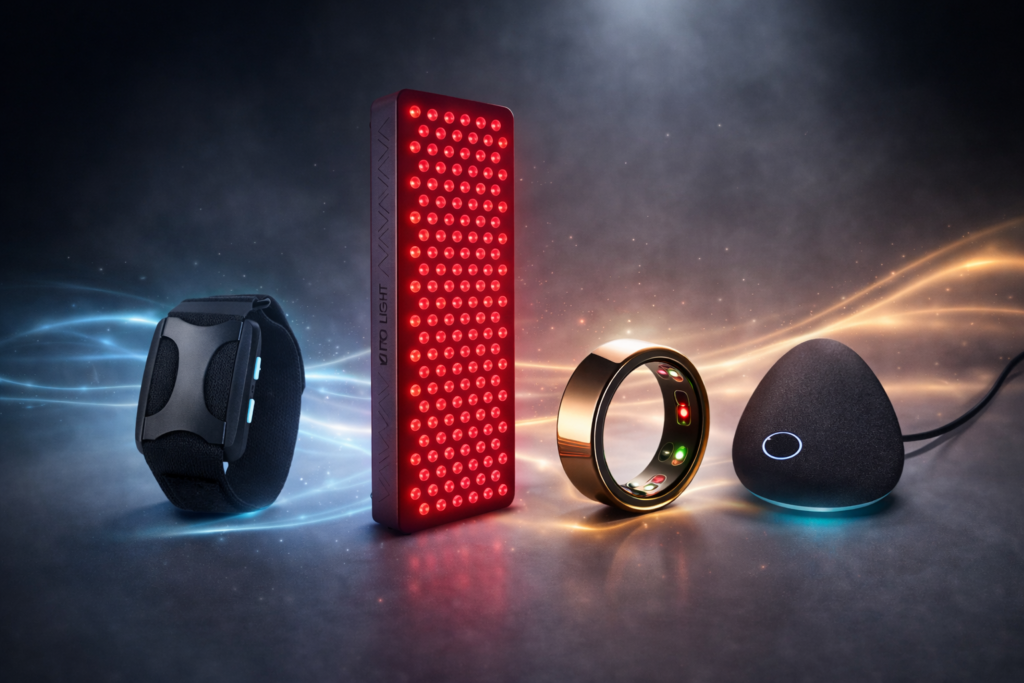
Therapeutic Devices
Over the years, I’ve gradually added a handful of devices and therapies that I believe may support resilience, recovery, circulation, sleep, metabolic health, and brain function. None of them are magic bullets, and none replace the fundamentals of nutrition, exercise, sleep, stress management, and social connection. They are simply tools that I have chosen to incorporate into my overall prevention strategy.
One thing I’ve learned is that consistency matters more than complexity. I don’t spend hours every day chasing optimization. In fact, most of what I do has become part of my normal routine.
My current lineup includes:
Red Light Therapy, PEMF, and the Megelin Bridge
Most mornings, I combine several therapies into a single 15-minute session. I use red light therapy on my head (crown), a PEMF mat, and my Megelin red light bridge simultaneously. It sounds far more complicated than it actually is. Once everything is set up, I simply relax for fifteen minutes and let the devices do their thing.
Vielight Neuro Gamma
I also own a Vielight Gamma headset, which uses near-infrared light and 40 Hz stimulation. I use it more intermittently than some of my other devices, but I continue to follow the emerging research with interest.
Oura Ring
Of all the technology I use, my Oura Ring may provide the greatest day-to-day value. It helps me monitor sleep quality, heart rate variability, resting heart rate, activity, and recovery trends over time. It doesn’t tell me what to do, but it often helps me understand how my choices are affecting my physiology.
Meditation and Relaxation Tools
Perhaps the least expensive and most important tool in my collection is simply the ability to slow down. When life becomes stressful or my mind starts racing, I often use guided meditation tracks or relaxation exercises to help reset my nervous system. This is a great relaxation method to practice. I’ve recorded this on my phone and use it often.
Apollo Neuro and Sensate
I also keep a few tools on hand specifically for nervous system regulation.
The Apollo Neuro is a wearable device that delivers gentle vibrations designed to promote relaxation, focus, recovery, or sleep, depending on the selected mode. I don’t use it every day, but I often reach for it during periods of increased stress, travel, or when I feel I need a little help shifting into a calmer state.
I also use a Sensate device from time to time. Sensate combines soothing soundscapes with gentle vibrations placed on the chest to encourage relaxation and stimulate the body’s natural calming response. I find it particularly useful when I want to slow down, decompress, or simply create a few minutes of intentional calm in an otherwise busy day.
Neither of these devices is essential, but both serve as helpful reminders that brain health is not only about biology and biomarkers. Learning how to manage stress, regulate the nervous system, and create moments of calm may be every bit as important as any supplement, medication, or therapeutic device.
My Takeaway
One thing I’ve learned is that the sticker price of a therapeutic device doesn’t tell the whole story. When I spread the cost of my HBOT chamber over ten years and two users, the monthly cost becomes surprisingly modest. The same is true of my sauna. While neither purchase is inexpensive upfront, I try to evaluate them the same way I would any long-term investment: by looking at the cost per use rather than the initial purchase price.
If this list feels overwhelming, don’t worry. I didn’t start with all of these devices, and I certainly don’t believe anyone needs them all.
The fundamentals will always matter most.
I view these therapies as incremental tools that may provide an additional edge over time. Some have stronger evidence than others, some are more experimental, and all continue to evolve. My approach is simple: stay curious, remain open-minded, follow the science, and focus on what appears to provide the greatest benefit for the time and effort invested.