The Alan S. Green Framework
In November 2021, I traveled to New York to become a patient of Dr. Alan Green, a physician known for his work with off-label rapamycin (sirolimus) and his focus on APOE4. At the time, I created a detailed recap of my visit so I could refer back to it as needed. Dr. Green has worked with hundreds of APOE4 patients, many of them homozygotes, and shared that he has not observed cognitive decline among those under his care.
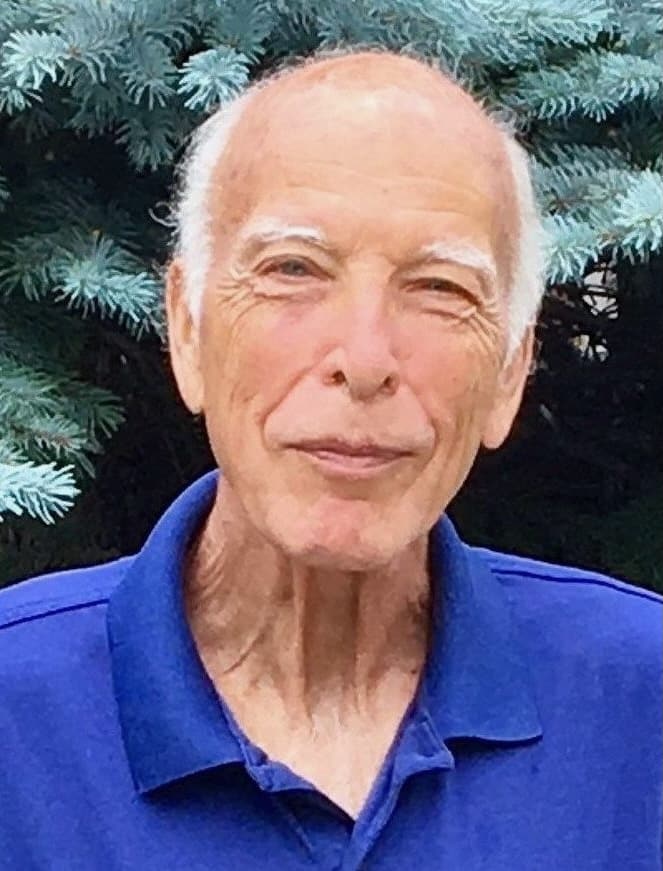
Early Prevention of Alzheimer’s Disease in APOE4 Carriers
A key takeaway from my many conversations with the late Dr. Alan Green is this: he believed that protecting the blood-brain barrier should be a primary focus for APOE4 carriers. Whether history proves him right remains to be seen, but his conviction on this point never wavered.
The late Alan S. Green was one of the first physicians – if not the FIRST – to focus almost exclusively on the prevention of Alzheimer’s disease in APOE4 carriers. Through his clinical practice and educational website, he synthesized emerging neuroscience research into a prevention-focused framework that challenged prevailing assumptions about Alzheimer’s disease.
While some aspects of his clinical approach remain debated, several of the scientific principles he emphasized have since gained increasing attention in Alzheimer’s research. He humble and kind man. Hanging on the wall in his Little Neck, NY office, was not only his Doctorate of Medicine, but also a Juris Doctor.
1. Alzheimer’s Disease May Begin with Vascular Dysfunction
A central insight emphasized by Dr. Green was that neurodegeneration often begins with vascular changes in the brain, long before cognitive symptoms appear.
Research led by neuroscientist Berislav Zlokovic demonstrated that individuals carrying the APOE4 allele can develop early dysfunction of the neurovascular system, including damage to the blood–brain barrier (BBB).
Key findings from this research include:
- APOE4 activates an inflammatory signaling pathway involving cyclophilin A (CypA) and matrix metalloproteinase-9 (MMP-9).
- This pathway contributes to breakdown of the blood–brain barrier.
- Damage to the BBB allows toxic molecules from the bloodstream to enter the brain.
- These vascular abnormalities can precede neuronal damage and cognitive decline.
Today, many researchers consider neurovascular dysfunction to be one of the earliest biological changes associated with Alzheimer’s disease.
2. Cerebral Blood Flow Declines Decades Before Symptoms
Dr. Green frequently emphasized studies showing that reduced cerebral blood flow occurs long before Alzheimer’s disease is clinically detectable.
Neuroimaging studies of cognitively normal APOE4 carriers have demonstrated:
- reduced regional cerebral blood flow
- altered glucose metabolism in vulnerable brain regions
- early disruption of neurovascular coupling
These changes suggest that the brain’s energy supply system may begin deteriorating years or decades before memory symptoms appear.
“Rapamycin, used weekly, is extremely effective for the prevention of Alheimer’s disease in APOE4 carriers …. but must be started before cognitive decline”
– Dr. Alan Green
3. The “Domino Model” of Alzheimer’s Disease
To explain the progression of Alzheimer’s disease, Dr. Green often described the process as a cascade of biological events.
In simplified form:
Early events
- Blood–brain barrier deterioration
- Microvascular dysfunction
- Reduced cerebral blood flow
Intermediate events
4. Myelin damage and impaired axonal transport
5. Synaptic dysfunction
Late events
6. Amyloid plaque accumulation
7. Tau pathology
8. Neuronal loss
In this model, amyloid and tau pathology appear late in the disease process, reflecting downstream consequences rather than the initial cause.
This perspective differs from the traditional amyloid-first hypothesis, although current research increasingly recognizes that Alzheimer’s disease likely involves multiple interacting pathways.
4. The Myelin Maintenance Model
Dr. Green also highlighted the work of neuroscientist George Bartzokis, who proposed that Alzheimer’s disease may involve a failure of the brain’s myelin repair systems.
Myelin is the insulating layer surrounding neuronal axons that allows electrical signals to travel rapidly through neural circuits.
Key concepts from this model include:
- The human brain relies heavily on high-speed neural communication supported by myelin.
- Oligodendrocytes continually repair and maintain myelin throughout life.
- Aging, inflammation, and vascular dysfunction may impair this repair process.
When myelin maintenance fails, neural circuits become less efficient and more vulnerable to degeneration.
5. The Importance of Fast Axonal Transport
Another concept emphasized in Dr. Green’s work is fast axonal transport (FAT).
This cellular transport system moves essential components along neurons, including:
- mitochondria
- neurotransmitter vesicles
- structural proteins required for synaptic maintenance
Disruption of axonal transport can lead to:
- accumulation of amyloid precursor protein
- synaptic dysfunction
- neuronal degeneration.
Within the myelin repair framework, these changes may represent failed attempts to repair damaged neural circuits.
6. mTOR Signaling and Brain Aging
Dr. Green’s clinical work focused heavily on the mTOR signaling pathway, a fundamental regulator of aging biology.
mTOR influences:
- cellular growth and metabolism
- autophagy (the removal of damaged cellular components)
- mitochondrial function
- synaptic plasticity
With aging, increased mTOR signaling may contribute to:
- reduced cellular repair mechanisms
- accumulation of damaged proteins
- vascular and metabolic dysfunction.
These processes have been implicated in several age-related diseases, including neurodegeneration.
7. Rapamycin and mTOR Inhibition
Rapamycin is a drug that inhibits mTOR signaling.
Animal studies cited by Dr. Green found that rapamycin treatment in APOE4 transgenic mice:
- restored cerebral blood flow
- improved blood–brain barrier integrity
- improved brain glucose metabolism
- improved learning and memory performance.
These findings suggested that targeting mTOR might help protect cerebrovascular and metabolic function in early disease stages.
However, it is important to note that most evidence for this approach remains preclinical, and controlled human trials are still limited.
“I consider ApoE4 carriers, especially double ApoE4 carriers to be a medically neglected segment of the population
and they represent a major focus of my office”
– Dr. Alan Green
8. Prevention Must Begin Before Cognitive Decline
Perhaps Dr. Green’s most important message was that prevention must begin long before symptoms appear.
For individuals carrying APOE4:
- biological changes may begin decades before diagnosis
- interventions aimed at preserving vascular and metabolic health may need to begin early in adulthood.
This emphasis on preclinical prevention is now widely reflected in modern Alzheimer’s research.
Legacy and Continuing Research
Dr. Alan Green’s work helped draw attention to a population that had long been overlooked: individuals carrying the APOE4 gene who wish to prevent Alzheimer’s disease before symptoms develop. Dr. Green referred to us as “the most neglected patient population in modern medicine”.
His synthesis of research from vascular biology, aging science, and neuroscience highlighted several areas now receiving growing attention:
- neurovascular dysfunction
- blood–brain barrier integrity
- myelin maintenance
- the role of mTOR signaling in brain aging.
Although many questions remain unresolved, these concepts continue to influence ongoing research into early detection and prevention strategies for Alzheimer’s disease.
Key Scientific References
Research highlighted in Dr. Green’s framework includes work by:
- Bell RD & Zlokovic BV (2012) – APOE4 and blood–brain barrier breakdown
- Halliday MR et al. (2015) – Pericyte degeneration and BBB dysfunction
- Lin AL & Galvan V (2015) – Rapamycin effects in APOE4 transgenic mice
- Van Skike C & Galvan V – mTOR and vascular aging
- Bartzokis G (2011) – Myelin model of Alzheimer’s disease
Interested in a Deep Dive on Rapamycin?
Dr. Alan Green was one of the earliest and most influential voices exploring the potential role of rapamycin in healthy aging and Alzheimer’s prevention. His medical practice focused heavily on APOE4 carriers – many of them APOE4 homozygotes – whom he believed represented one of the most neglected patient populations in modern medicine. He was a passionate advocate for helping these individuals understand their risk and take proactive steps to protect their future cognitive health.
Dr. Green passed away on September 19th, 2024. His legacy lives on in the rapamycin community and among all who knew, loved and respected him. I am thankful I was able to be his patient for 3 years, having semi-annual virtual visits after our initial in-person meeting and I owe a debt of gratitude for crossing paths with him and being under his care!
My ongoing Rapamycin source:
Following Dr. Green’s death, I spoke to my PCP regarding continuation of Rapamycin treatment and the need for a prescriber. Since she knew I’ve been on rapamycin without incident or side effects since 2021, she did not hesitate to provide the prescription for me. I continue on my once weekly dosing of 6mg. I occasionally skip a week to ensure washout.
Rapamycin can be sourced through multiple online websites, such as Agelessrx.com. (includes prescription) and others – I use GoodRx to obtain the best price at my local CVS Pharmacy.